Personal

Reading, Rabbits and Arhythmofwriting?

Eh. I’m just trying to decide if I can do “3 Rs” here at Untangling Tales without boring my delightful lurkers.

So here’s your chance to tell me.  I’m always shocked at the number of hits my stat-counter tells me I’m getting, and while some of it is Google sending people to my archives, I’m curious what makes the rest of you come back.

This is the place where I feel like I’m talking to myself in an empty room.

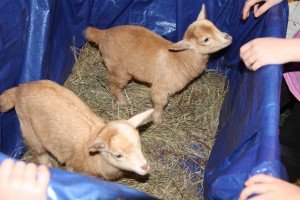
I am having a great deal of fun with my rabbits.  I’m thinking of starting a category for pictures and projects.  (For example, we have Before:

and After:

Both pictures and a project. Whee. About an hour it took me to shear him; I hope that gets shorter as I get more practice.)

And really, the only connection to what I already do here is the atavism I mentioned yesterday.  The idea that animals and fiber arts are a part of life as much as reading and writing (storytelling).

But then, perhaps that’s just my life.

But you’re welcome to peek in and enjoy.

So there’s the question: Are you interested?

Boundries

Apparently they aren’t just about saying *no*.

I pretty much have that down (despite it making me feel like a jerk sometimes), so I’ve not paid close attention to the topic when it comes up.

The study of boundaries (or rather, the person teaching about them) also suggests that I, like everyone, am continually teaching people how to treat me.

Last week I went off on an unorganized verbal riff with a total stranger (that is, we’d just introduced ourselves to each other as we worked in the same garage).  Toward the end I felt embarrassed at her patience and made a joke about how “I’m just thinking with my mouth open, feel free to walk away any time.”

But for real, that’s the worst thing she could have done.  That’s the sort of thing that completely burns me, and I only said it because I was trying to absolve my felt-foolishness.

Later that evening, in a different (and more organized) exchange, she did just what I had “taught” her and decided it was time for her to leave (albeit, more graciously than just walking away). I had “taught” her that I didn’t care if she listened (or participated) or not, and that was untrue.

But this also means I need to consider how I want to be treated, and subsequently how to convey that.

For me it means being not-flippant, and treating as serious the things that are serious to me.  I often criticize (or redirect) Natasha for using “baby talk” when something is disproportionately important to her, or she’s not sure how I will respond.  But I think I do the same thing: trying to hold lightly to something when I’m not sure my listener will equally share the weight of it.  I make a joke out of something important to me, then feel wounded to watch it tumble.

This is something I want to work on.

Another angle on boundaries that isn’t just saying no, it’s also not saying anything I’m not comfortable saying, or just don’t want to say.  The idea that I am allowed to not-share certain thoughts with anybody. (This in contrast within both Christian and the modern culture’s emphasis on being “real” or “genuine” at any/all costs.)

A commenter on this short and thought-provoking post called authenticity and transparency “the most important thing about social media.”  Yikes.

But it’s my tendency to agree, and not just about social media. I’ve always acted as though it was my purpose (or at least my job) to be transparent as possible.

A healthy sense of boundaries teaches that nothing about me is public property, or available for mistreatment.

An interesting aspect of The Perilous Gard is how the main character, Kate, refuses to push another character for the inner workings of his (obviously troubled) mind. She feels there ought to be one person in his world who lets him choose how much he’s willing to share. But it’s not like she enjoys it.

“Though she honored his privacy, she resented it very much, always to be shut out…”

This story was the first time I’d ever thought of feelings or inner battles as private property.

And I wonder a bit if any of that came from my time working with foster kids. “Use your words” was the cure-all/preventative for most behavior issues, so openness with everything was strongly reinforced.

But these two new ideas have made me curious to pull out my old book (that I’ve started ~ five times and never finished) to see what else I’ve missed.

Eccentric

“Wow,” my mom said when I told her. “I though you had to be way older. That’s really cool.”

Last week someone was describing first-impressions and one of the words he used for me was eccentric.

I mentioned this after church, and one of the women seemed to grow offended or anxious for my sake.

“Did he really know you?” she asked. How could he say that? was all over her tone.

“That wasn’t the point,” I tried to explain, not sure how to say that no matter how he meant it (and I was convinced he meant it in a neutral way), I felt honored by the word.

You see, though I didn’t have the label for it yet (that came about two days later), I was sure eccentric meant strong. It takes a distinct measure of strength to continue to be notably different from the world around you.

I’ve expressed how thankful I am that I was homeschooled, because it meant that I wasn’t pummeled into some standardized mold by my peers.  I don’t think I would have been this strong then.   And I rather like who I’ve grown into.

When I meet (usually in a story) an individual that is both weird and attractive, I just assume they’re good at something. The Bunny-Ears-Lawyer can get away with anything because they are. that. good. so no one forces them to change.

But I have a few people in my world that are just weird. Not the eccentric + attractive combination that is necessary to assume skill.  So I was sort of putting myself down, putting myself in that (“merely weird”) category, when, two days after I found the label, another recent acquaintance spontaneously addressed this.

I’ve gotten the distinct impression, on reviewing this last week, that God has been telling me over and over again, You have value.  A message I needed to hear.

“I remember seeing you at the last potluck,” the new woman said.  It was the first time we’d spoken much. “I saw you talking with all this energy and information– you had so much information– and there were people around you, and they were listening to you. And I thought, I want to sit near *her*.

Many many times I’ve been afraid of burning people, vaguely aware that my intensity is higher than, well, what people expect.

Whatever that means.

And I forget that God has placed people in my world who actually enjoy the way I am.  Including my eccentricity.

And that I’m allowed to enjoy me too. :)

Oh yeah, I do that, too.

Went with the kids to VBS this morning and met a young photographer.  So fun.  Great conversation that reminded me so many reasons why I love photography.

Makes me want to dive back in…

Think I’ll test the waters by bringing my camera tomorrow.

  • And last night I finished prepping part 5 of Lindorm for test readers (started part 6 and confirmed I have 12 parts total)
  • Confirmed (with a sort of digital handshake) that I’ll be buying the Californian rabbits (foundation stock) from the breeder moving out of state
  • finished that mondo canning project I started last Tuesday (got to remember to start smaller next time)
  • Went camping overnight with just Jennifer.  (Slept 8 hours in a row for the first time since I can remember)
  • Ordered (!) a travel-size carbon-fiber guitar (from Ireland, and it’s back-ordered, so it’s going to be a while).  So excited about that.
    • Jay’s asked if that means I’m getting rid of my wooden travel-guitar, but I figure I’ve got enough kids to keep both guitars busy, so I’ll hand onto it for now.
  • And I’m almost keeping my house clean– which is way-cool.

If I start knowing more picture-people in real life I’ll have to seriously figure out putting more stuff on-line.  I think my favorite stuff is portraits. Definitely the detail stuff.

The Measure of Reality

For all that trusted friends are the best mirrors, it is still true that for each of us we are the measure of the world.

That is, for all that we confuse ourselves, we also are the thing we know best.

Today’s revelation: I figured out my love-formula.

I mean “what it takes for me to feel loved”:

  1. being appreciated/honored – I’m treated as worthy of someone’s time
  2. being made to think – the ending is that endorphic euphoria you might recognize from the end of a good workout.

Now, taking myself as “the measure of reality,” I can do several things with this information.

  • I can see where I’ve already applied it, in the unconscious way we naturally speak our own language
    • Reading to my children, training them to think
    • Feeling *really* connected to individuals who have parallel definitions of love– or at least provide what I need
  • I can understand how my feeling unloved by certain people is a matter of practice and not of truth
  • And I can be motivated (combining those two) to more-actively apply my observational skills to be sure and learn how to communicate love in a meaningful way.

I got this multiple-languages concept (and looking for others to be different from me) from The 5 Love Languages model, but I was unsatisfied with the broad strokes of “only” five.  I can see the Five bound up in my Two, but knowing what specific “vitamins” I need I want to jump straight there.

Question: Do you find The Five Love Languages a useful model?

There is no shame in Ignorance

Unless it is purposeful.

Had a lovely lunch with friends today. The children adored the fresh audience for their exploits and collected trivia.

“Caterpillars have sixteen legs,” 4-year-old Elisha declared with conviction.

An adult looked to me and I nodded. “Six to be adult legs and ten more for creeping along,” I affirmed.  Adding quickly, “The only reason I know is that we just read all about it on Friday.”

The story prompted the memory of an exchange that would happen between me and my siblings when we were kids.

Kid X: FACT!

Kid Y: You only know that because you read it in a book.

And I remember shame and accusation being in the rebuttal (I imagine being on both the giving and receiving end of the sting). but looking at it today we adults laughed at the idea we could inherently know anything. Especially about caterpillars.

As a child I would have been ashamed for not going out and counting for myself. And then needed to find multiple examples before I’d be sure I could trust what I’d observed.

~

A friend I went to high school with can only hear with one ear.  A surgery cut the critical nerve and she has no way to hear on the right side.

One day she was looking for her cell phone and had to call it four times before she realized it was in the right-hand pocket of her jeans.

“I felt so silly,” she told me. “I could hear it and I kept looking and looking…”

“There’s no reason to feel silly,” I said, feeling fierce and defensive of her. “There is no reason to recognize direction without two reference points!”

And I have no idea why I made this jump, but I instantly thought of emotional health (okay, the idea might be simply because the topic is near the top of my mind).

There are a spectrum of issues that people can deal with: bitterness, depression, fear, anger.  There are predictable causes, and nearly as predicable results and even “cures.”

My observant, analytical mind looks at the slice of issues I face, and questions why I haven’t already reached perfection.  I mean, gotten over these unattractive elements in myself that I find embarrassing. But probably that means perfection.

I’m hearing the phone ring. I’m looking all around. I know what I want is within reach and I’m ashamed I haven’t found it yet.

But right now I have only one reference point.  Myself turning in space.  We don’t learn in a vacuum.

So I reach out, discern which way is up, and identify reference points.

I will refuse to be ashamed of not knowing everything.  And I will trust God to guide me into all Truth, as he promised.

What if this isn’t something you get over?

What if this is something God’s giving you to wrestle with your whole life?

Here is, to me, the biggest part of Christian community: individuals who are safe (as opposed to, you know, unsafe.), and have earned the right to be heard. I know this woman loves me. She genuinely desires peace and good things for me.  So a hard suggestion like that is not painful.

In fact it was perfect, because whether or not it proves to be accurate it provided the necessary re-framing I needed to lighten up.

I’ve been treating my emotional health as something like a sprint: The goal’s not far away: the harder I push, the sooner I’ll reach it!

So I read, and think, and self-analyze, and look for the right book, or bible study, or counselor. And I see real improvement, and I can feel myself getting stronger and that just encourages me to dig in harder, I’m so close!

And then find new things I need to work on.

*sigh*

I don’t know if I’m going to fight this my whole life (naturally I hope not), but I can see the wisdom in in treating it as a marathon and not a sprint.

The most effective teaching seems to be about slowing down. And not just about but some reasonable suggestions how. That’s been my missing link.

Not only does the shift in perspective encourage a more-thoughtful approach to how I divide my time, it also lightens the pressure on each new thing I approach or try.  This does not have to fix everything. This can be appreciated for what it is, not just how far it advances my goals.

And doesn’t that sound more sane?

A Warning:

The Number One reason to cultivate good habits is that when you are too tired to do anything else, habits are what you live from and on.

~

I am sick.

I hate being sick. It enhances all my limits and tendencies.

To my relief I see light as well as darkness: I couldn’t spend more than a day utterly doing “nothing.”  My need for order (hey! I have one of those!) has dragged me through my sludge to get significant (though not nearly “enough”) things done each day.

I have taken more time to read (non-fiction– I haven’t had the stamina to enter anyone else’s drama this week), and I feel like a long-neglected part of my mind has been watered and nourished.

But mostly this experience has made me more aware of habits, and how much I want to focus on training them once I have the strength again.

Meeting the Readers

There’s not a lot (in my writing world) much more exciting to me than meeting and talking with the type of young people who will be reading my book.

I’ve had a few delicious encounters with teenage fantasy fans, and they all go about the same way. In my half-curious, half-outgoing way, I start asking questions about the sort of stuff they read.  I love hearing what draws somebody into a book, because I want to make a book that draws people in.

Last night I talked with a trio of teenage girls and was very disappointed to hear (though not for the first time) that the *cover* is the first thing that makes them pick up a book to learn more.

Disappointed, not because I’m not the same way, but because I know I shouldn’t expect to have any control over what the cover looks like. Kinda drives home my powerlessness.

I also found words coming out of my mouth that weren’t quite fair, like, “I don’t like it when authors seem to be trying to teach you something– like a character does something bad and everything else that happens is to show you how bad it was.”

This is both true and not-true.

I don’t like didactic books that make a story serve the lesson the author wants to teach. I do like stories that leave me feeling like I know more than I did in the beginning.

Generally, because of the kinds of books I read, I’m observing more about interpersonal relationships, or emotional intelligence, than anything “factual,” but those are things I’m not seeing a lot of alternate teachers for, so I’ll take what I can get.

I don’t have to “believe” it all, obviously, but good authors definitely make me think, and frequently see things in a new way. 

THIS I like.

A lot.

But giving them my blog and e-mail (Hi, girls, if you’re reading this.) I was forced to look at this website in a different way, realizing that Untangling Tales probably isn’t going to be able to serve my goals as a writer, simply because there is way. too much stuff going on here.

So I’m playing with the idea of an author/novel site to move my fiction-specific stuff to, and I’ll keep y’all posted.  The domain I want is still available…

For the record I am down to two blogs: this one and the family scrapbook.

Obscurity has its Advantages

One of which is realistic expectations.

Or, rather, few to none, which works as well.

I’ve gone through cycles of seeking my “brand” or identity, or audience, pouring thought and wistfulness and effort into producing content days at a time.

The closest I’ve gotten to a theme is, “an unexamined life is not worth living.”

Which is overstating it, as quotes will.

When I have fears that I may cease to be
Before my pen has glean’d my teeming brain,
Before high piled books, in charact’ry,
Hold like rich garners the full-ripen’d grain;
When I behold, upon the night’s starr’d face,
Huge cloudy symbols of a high romance,
And think that I may never live to trace
Their shadows, with the magic hand of chance;
And when I feel, fair creature of an hour!
That I shall never look upon thee more,
Never have relish in the faery power
Of unreflecting love!—then on the shore
Of the wide world I stand alone, and think
Till Love and Fame to nothingness do sink.

John Keats (1795–1821)

For now, I more wish to belive that the unexamined life may perhaps be lived better (than examined), but without the benefit of reproduction. And I believe a scientist would say that any outcome, however perfect, is not useful unless it can be reproduced.

While I do not strive to live as a scientist, I do wish to be of use. And I know my deepest need (for an improved life) is not perfection, but consistency.

But, returning to obscurity (we left it for a moment), I think on what is necessary to leave it: nakedness. Utter exposure, whether voluntary or not, is the cost of coming out of invisibility.

It was Edna St. Vincent Millay, I once read, who said, “A person who publishes a book willfully appears before the populace with his pants down. If it is a good book nothing can hurt him. If it is a bad book nothing can help him.”

My friend Becky and I have had (e-mail) conversations over this, the choice about how open to be.  She knows her audience. She has a sense of mission in her writing, and finds both power and purpose in choosing to open some very personal parts of herself.

I have none of those motivators. Much of my fragility and “intimacy” is very self-centered; they are things I want to remember on topics that are close to my heart and so are easier for me to write about.

Or maybe just easier to stay connected long enough to finish.

All my life I have heard about “masks” and “getting rid of masks.” The idea of presenting a false front is despised in all circles, even while (as a culture) we feel more disconnected from one another than ever before.

So people talk publicly about stuff that doesn’t make you blush any more, and shocking announcements are defended effectively.

I tried to explain the phenomenon to my mother (who doesn’t need anything explained to her), and she is simply horrified at the practice. “Why would anybody do that?!” she asks.

I proffered a few of my theories (the attempted explanation part), but she didn’t seem to hear any of them. And I can’t say I blame her. I don’t rightly understand it myself.

But I’m a part of it.

Apparently I’m in the early years of Generation-Y, and attribute it to what you will (I’ve read theories about this too), we are a “real” generation, where authenticity is the key word.

I’m a part of it without even knowing it.

I can’t tell you how many times someone older than me (and not always very much older) will laugh in an embarrassed way at something I just said and respond, “That’s what I love about you, Amy, you’re so real.”

Which, frankly, confuses me, because what else can a Believer be?

Continue Reading →